
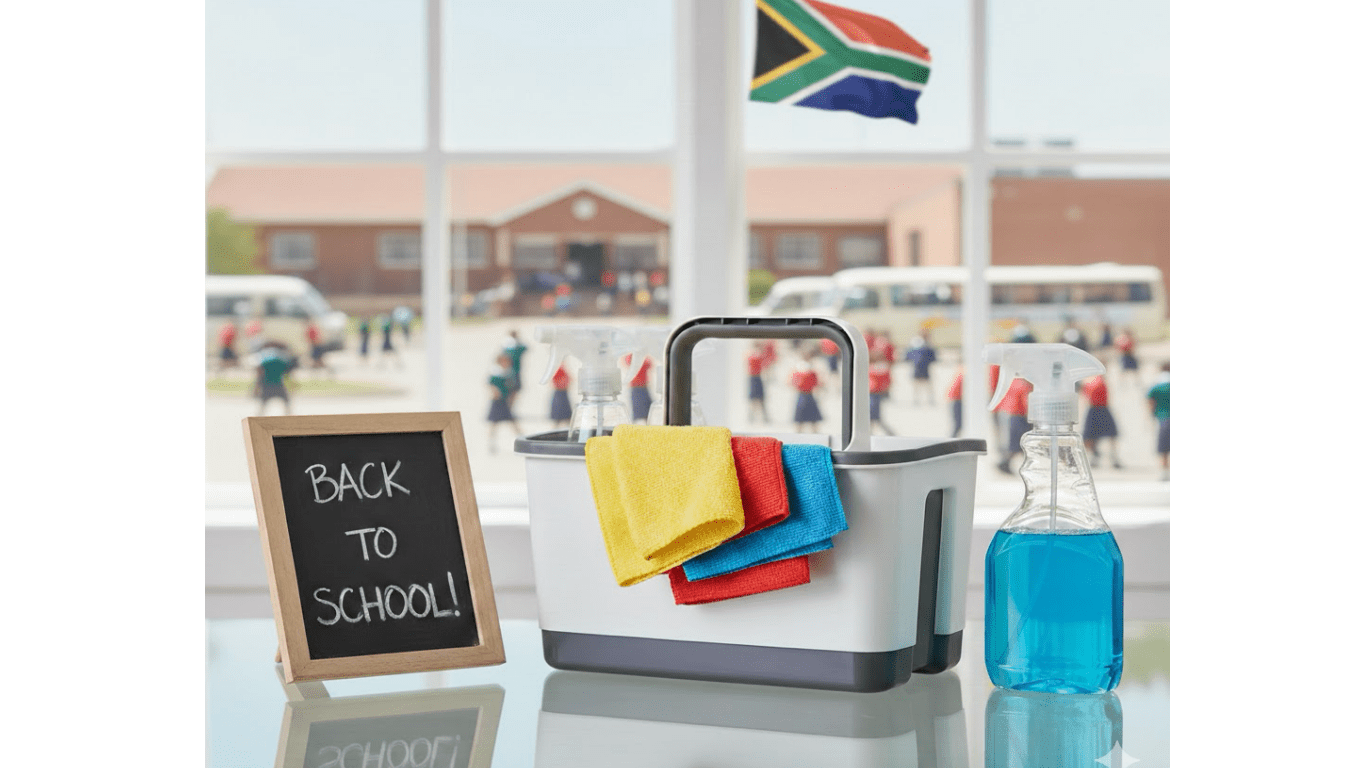
Turning Cleanliness into Your Institution’s DNA: Every Classroom, Every Learner, Every Day
Back to School: Why School Hygiene Matters More Than Ever
It’s that exciting time of the year again – back to school. Across South Africa, classrooms fill up as learners reconnect with friends, while families prepare for the academic year ahead.
Some children begin their journey in Grade R during this period. Others prepare to complete their final year in Grade 12. No matter the grade, schools must provide a clean, safe, and hygienic learning environment.
School hygiene goes beyond appearances and directly influences daily school life. In particular, it supports:
- Health and safety: Schools reduce the spread of germs, infections, and seasonal illnesses through proper hygiene.
- Learning and concentration: Clean classrooms help learners focus and improve academic performance.
- Confidence and trust: Parents gain reassurance when schools visibly maintain hygiene standards.
South African legislation reinforces this responsibility. The Occupational Health and Safety Act and National School Hygiene Guidelines require schools to maintain high cleanliness standards, especially during the back-to-school period.
The Real Risks of Poor School Cleanliness
The start of a new school year should feel positive and energising. Poor hygiene, however, quickly creates avoidable challenges when schools neglect cleanliness.
- Increased infections: Flu, stomach bugs, and contagious illnesses spread rapidly among learners.
- Higher absenteeism: Frequent illness disrupts learning schedules and affects staff productivity.
- Reputational damage: Parents expect schools to provide a safe and hygienic environment.
- Pest infestations: Ants, cockroaches, rodents, and other pests thrive in poorly maintained facilities.
Consistent hygiene practices protect learners, support staff, and preserve the institution’s reputation.
Creating a Hygiene Culture That Lasts All Year
Effective hygiene requires more than a once-off deep clean. Schools achieve better results when they integrate cleanliness into everyday routines.
Institutions can strengthen hygiene culture by taking the following steps:
- Lead by example: Staff and management demonstrate good hygiene habits daily.
- Implement clear hygiene policies: Schools define cleaning routines and responsibilities.
- Provide ongoing staff training: Teams learn correct chemical use and sanitation methods.
- Encourage learner participation: Hygiene clubs and awareness campaigns build accountability.
- Conduct regular hygiene audits: Schools identify and resolve issues early.
When hygiene becomes part of the institution’s DNA, every classroom supports healthier learning throughout the year.
Masana Hygiene Services’ Professional Approach
Masana Hygiene Services partners with schools across South Africa to create safe, compliant, and welcoming learning environments.
Our school hygiene services deliver practical, reliable support through:
- Professional, uniformed cleaning teams using industry-grade equipment.
- Comprehensive facility cleaning for classrooms, libraries, halls, and sports areas.
- Targeted pest control for ants, cockroaches, rodents, and other common pests.
- Cleaning practices that meet South African health and safety regulations.
- Customised schedules that minimise disruption during school hours.
A school is only truly clean when Masana does it.
Practical Daily School Hygiene Tips
Daily habits strengthen hygiene standards, even when professional cleaning services operate on site.
- Sanitise high-touch surfaces such as desks, door handles, switches, and keyboards.
- Add hygiene stations to promote regular handwashing and sanitising.
- Clean toilets and kitchens several times each day during busy periods.
- Empty bins daily and separate recyclable waste.
- Reduce pest risks by sealing cracks and storing food correctly.
Book a School Hygiene Assessment Today
Preventable health risks should never disrup