
Why Climate Change Is Creating New Pest Challenges for Businesses
Climate change is transforming the way businesses approach health, safety, and hygiene. While conversations about climate change often focus on extreme weather, rising sea levels, and environmental impacts, another growing concern businesses cannot ignore is changing pest behaviour.
The world is getting warmer, and these rising temperatures are influencing how pests survive, reproduce, and spread. Warmer conditions, unpredictable rainfall patterns, and longer seasons are creating environments where pests can remain active longer and establish themselves in areas where they were previously less common.
For businesses, this means traditional pest control methods that focus only on reacting to infestations may no longer be enough. Organisations need to adopt proactive prevention strategies that identify risks before pests become a threat to employees, customers, products, and operations.
A Warmer Climate Is Creating Better Conditions for Pests
Temperature plays a major role in pest activity. Many insects and rodents depend on environmental conditions to reproduce, find food, and survive. As global temperatures increase, these conditions are becoming more favourable for many pest species.
Warmer weather can result in:
-
Longer breeding cycles
-
Increased pest populations
-
Greater movement of pests into new areas
-
Extended periods of pest activity throughout the year
In the past, colder months often reduced pest activity naturally. However, as winters become milder in many regions, pests may remain active for longer, creating challenges for businesses that previously relied on seasonal pest treatments.
Cockroaches, flies, ants, and rodents are particularly affected by warmer conditions because they thrive in environments where food, moisture, and shelter are available.
How Climate Change Is Changing Pest Behaviour
Climate change not only increases pest numbers; it also changes how pests behave.
Longer Pest Activity Periods
As temperatures rise, pests may become active earlier in the year and remain active for longer. This means businesses may experience pest pressures beyond traditional peak seasons.
For example, a facility that previously experienced increased pest activity only during warmer months may now need year-round monitoring and prevention.
Expansion into New Areas
Changing temperatures allow some pest species to survive in locations where environmental conditions previously limited their presence.
This creates new challenges for businesses operating across different regions, as pest risks may vary and evolve.
Faster Reproduction Rates
Many pests reproduce more quickly in warm conditions. A small pest issue can therefore develop into a larger infestation if it is not identified and managed early.
Why Reactive Pest Control Is No Longer Enough
For many businesses, pest control has traditionally been viewed as a response service — something needed only after signs of an infestation appear.
However, by the time pests are visible, the problem may already be affecting the business.
A reactive approach can result in:
-
Increased health and hygiene risks
-
Food contamination concerns
-
Damage to buildings, stock, or equipment
-
Customer complaints
-
Negative impact on brand reputation
-
Possible compliance challenges
Modern businesses need to move from reaction to prevention.
Effective pest management is no longer only about eliminating pests after they appear. It is about understanding risks, identifying vulnerabilities, and implementing strategies that prevent infestations from developing.
The Importance of Integrated Pest Management (IPM)
Integrated Pest Management (IPM) is a proactive approach that focuses on prevention, monitoring, and targeted solutions rather than relying only on chemical treatments.
An effective IPM programme considers the entire environment and addresses the reasons pests are attracted to a facility.
Regular Inspections and Risk Assessments
Routine inspections help identify potential pest entry points, breeding areas, and conditions that may attract pests.
This allows businesses to address problems before they become major infestations.
Improved Hygiene and Sanitation Practices
Clean environments are essential for pest prevention. Proper waste management, food handling, and sanitation practices reduce the resources pests need to survive.
Monitoring and Early Detection
Monitoring systems help track pest activity and identify trends. Early detection allows businesses to take action before pests impact operations.
Targeted Pest Treatments
Rather than applying unnecessary treatments, IPM focuses on using the right solution for the specific pest challenge while considering safety and environmental responsibility.
How Businesses Can Prepare for Climate-Related Pest Risks
As pest behaviour continues to change, businesses should review their current pest management strategies and ensure they are prepared for future challenges.
Practical prevention measures include:
Seal Potential Entry Points
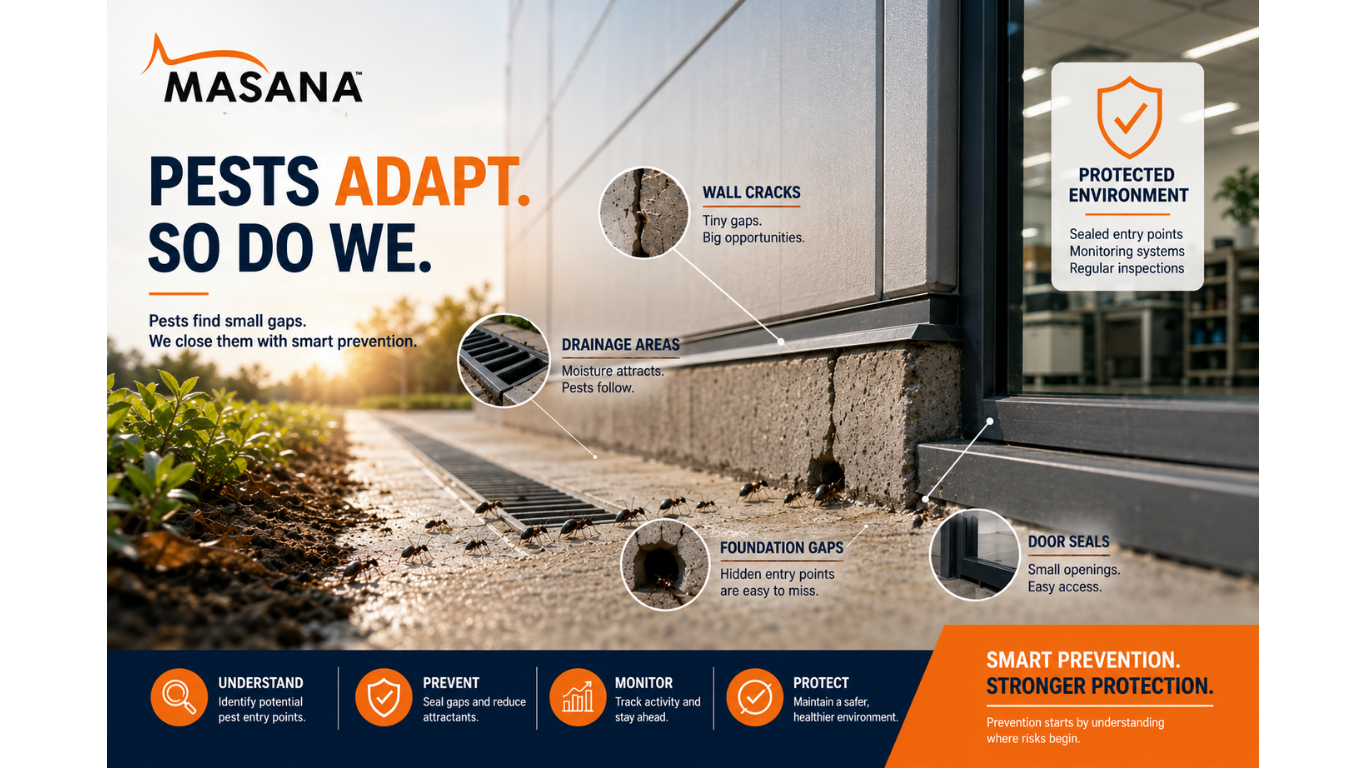
Small cracks, gaps, drains, and openings can provide easy access for pests. Regular inspections can identify and address these vulnerabilities.
Manage Waste Effectively
Poor waste management can attract pests by providing food sources and breeding opportunities.
Control Moisture
Leaks, standing water, and damp areas create ideal conditions for many pests. Addressing moisture problems is an important part of prevention.
Maintain Regular Professional Monitoring
Professional pest management services provide expertise in identifying risks and implementing preventative measures.
Adopt an Integrated Approach
Combining hygiene practices, inspections, monitoring, and professional treatments creates a stronger defence against changing pest challenges.
Industries Most Affected by Increasing Pest Risks
Climate-related pest challenges can affect almost any business environment, but some industries face greater risks due to their operations.
Food and Manufacturing
Food-related businesses are particularly vulnerable because pests can contaminate products, damage stock, and create serious compliance concerns.
Hospitality
Hotels, restaurants, and entertainment facilities rely heavily on customer trust. A single pest incident can impact guest experiences and reputation.
Retail
Retail environments need strong pest prevention strategies to protect products and maintain a safe shopping experience.
Commercial Offices and Facilities
Workplaces must provide healthy environments for employees and visitors. Effective pest control forms part of a wider workplace hygiene strategy.
Education Facilities
Schools and learning environments require ongoing prevention to maintain safe and hygienic spaces.
The Future of Pest Control: Prevention Over Reaction
The impact of climate change means businesses need to rethink how they approach pest management. Rising temperatures and changing weather patterns are creating new challenges that require smarter, more consistent prevention strategies.
The future of pest control is not simply about treating infestations — it is about understanding risks, monitoring changes, and creating environments where pests are less likely to thrive.
Businesses that invest in proactive pest management today will be better prepared to protect their people, reputation, and operations tomorrow.
Protect Your Business Against Changing Pest Risks
At Masana Hygiene Services, we understand that effective pest management requires more than a once-off treatment. Our Integrated Pest Management solutions help businesses identify risks, prevent infestations, and maintain safer, healthier environments.
Through professional inspections, monitoring, and targeted pest control solutions, Masana helps organisations stay prepared for the changing challenges brought by climate change.
Because prevention today protects your business tomorrow.
Contact Masana Hygiene Services to develop a pest management strategy designed for your environment.