
The Difference Between Cleaning, Sanitising and Disinfecting: Does Your Workplace Know the Difference?
Not all cleaning is the same. Understanding the difference between cleaning, sanitising and disinfecting could change how you manage workplace hygiene.
While a surface may look spotless, each process serves a different purpose in maintaining a clean and hygienic environment. So, does your workplace know which method to use and when?
Think about your office for a moment. The desks are wiped, the floors are clean, and the washrooms look presentable. But are the right cleaning methods being used in the right places?
It's a question worth asking, especially in busy workplaces where employees share desks, use the same kitchen facilities and touch the same door handles throughout the day.
Cleaning, sanitising and disinfecting are often treated as if they mean the same thing, but they don't. Knowing the difference can help businesses make informed decisions, avoid common cleaning mistakes and maintain more consistent hygiene standards.
Let's look at what each process does, when it's needed and why it matters for your workplace.
Cleaning: More Than Just Making Things Look Good
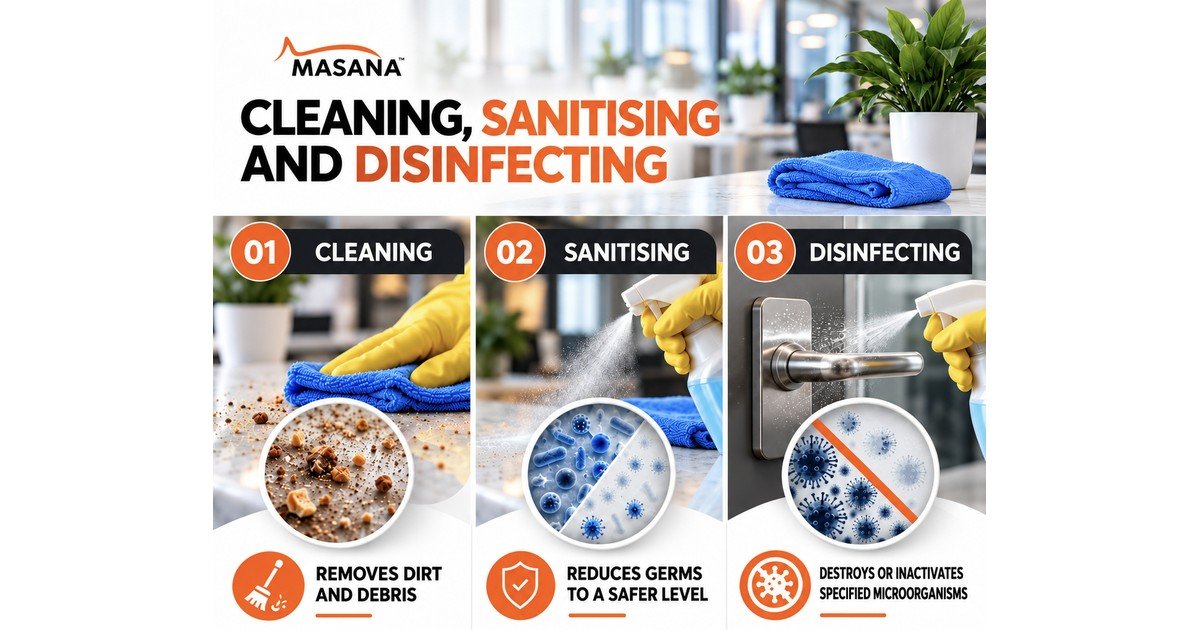
Cleaning is usually the first thing that comes to mind when we think about workplace hygiene. It's wiping down desks, mopping floors, removing dust and making sure shared spaces look presentable.
But cleaning does more than improve the appearance of a workplace. It removes dirt, spills, grease and other unwanted material from surfaces. It also helps remove germs that may be present.
Think about your office keyboard. It might look clean from a distance, but dust, crumbs and fingerprints can build up between the keys. The same applies to desk edges, light switches and shared equipment that people use every day.
A proper clean helps remove that build-up.
However, cleaning alone does not necessarily kill germs. That's why it's important to understand what other hygiene measures may be needed.
Where Is Cleaning Important?
Regular cleaning plays an important role in maintaining:
-
Office desks, chairs and meeting room tables.
-
Floors, carpets and reception areas.
-
Kitchen counters and dining spaces.
-
Windows and other glass surfaces.
-
Washroom floors, sinks and surrounding areas.
-
Shared equipment and frequently used workspaces.
Sanitising: Reducing Germs to an Appropriate Level
Imagine preparing lunch in your office kitchen. You've finished using the counter, and there are a few crumbs and food spills left behind.
Wiping the surface removes the visible mess, but depending on how the surface is used, you may also need to sanitise it.
Sanitising reduces the number of germs on a surface to a level considered acceptable under the relevant standards or product requirements.
It's particularly important in food preparation and food service environments, where specific hygiene procedures may require sanitising after cleaning.
In a busy workplace kitchen, for example, counters and other food-contact surfaces need appropriate care to help reduce the risk of contamination.
The product must be suitable for the intended surface and used according to its instructions. Food-contact surfaces may also have specific requirements, including rinsing after treatment.
When Might Sanitising Be Needed?
Depending on the environment and applicable requirements, sanitising may be appropriate for:
-
Food preparation counters.
-
Suitable kitchen equipment and food-contact surfaces.
-
Dining tables and other designated food-service surfaces.
-
Other surfaces covered by specific hygiene procedures.
It's important to remember that sanitising does not necessarily eliminate every microorganism.
Disinfecting: Targeting Specified Microorganisms
Now let's look at disinfection.
Unlike ordinary cleaning, disinfecting uses a suitable product to destroy or inactivate specified microorganisms on surfaces.
Think about how many people touch the same door handle in an office every day. Employees, visitors and delivery personnel may all use the same entrance without thinking twice about it.
Shared equipment, light switches and suitable washroom touchpoints can also receive frequent contact throughout the day.
Depending on the workplace and the level of risk, these surfaces may need to be included in a disinfection routine.
Where Might Disinfection Be Needed?
Examples include:
-
Frequently touched door handles and switches.
-
Shared workstations and suitable office equipment.
-
Appropriate washroom touchpoints.
-
Surfaces affected by certain contamination incidents.
-
Other areas identified through a workplace hygiene risk assessment.
However, disinfecting isn't simply a matter of spraying a product and wiping it away immediately.
Many disinfectants need to remain wet on a surface for a specified contact time to work as intended. If the product is wiped away too quickly, it may not achieve the result stated on its label.
Visible dirt and organic material can also interfere with some disinfectants, which is why surfaces generally need to be cleaned first unless the product is specifically designed for a combined cleaning and disinfection process.
The key takeaway: Disinfection targets specified microorganisms, but the product must be suitable for the task and applied correctly.
One process doesn't automatically replace the others. A workplace may need different methods for different areas, depending on how those spaces are used.
The goal isn't to use the strongest cleaning product everywhere. It's to understand what each area needs and choose the right approach.
Why Does This Matter for Your Business?
It's easy to assume that if a cleaning team comes in every day, everything is taken care of. But an effective hygiene routine involves more than mopping floors, emptying bins and wiping down visible surfaces.
Consider a busy office with clean reception floors but neglected shared equipment, kitchen counters and washroom touchpoints.
The workplace might look presentable to visitors, but there could still be gaps in its cleaning routine.
Understanding cleaning and disinfection helps businesses in several ways.
Maintaining Consistent Hygiene Standards
Different surfaces need different approaches. A kitchen counter, office carpet and shared workstation do not necessarily require the same products or cleaning methods.
A clear plan helps make sure each area receives the attention it needs.
Making Better Use of Cleaning Products
Using a disinfectant everywhere isn't always necessary. Choosing the right product for the task can help prevent surface damage, unnecessary chemical exposure and ineffective cleaning.
Creating a Better Workplace Experience
Employees and visitors notice when shared spaces are dirty, washroom supplies run out or unpleasant odours linger.
Maintaining clean, well-managed facilities helps create a more comfortable environment for the people who use them every day.
Improving Accountability
Cleaning schedules, checklists and regular inspections help businesses identify missed tasks, address recurring problems and monitor service quality.
For facility managers, these details matter. A good cleaning plan should reflect how a workplace actually operates rather than applying the same routine to every area.
Six Common Cleaning Mistakes Businesses Should Avoid
Even with a regular cleaning schedule, a few simple mistakes can affect the results.
Mistake 1: Assuming That a Surface Is Hygienic Because It Looks Clean
A surface can appear spotless without having been disinfected. Visual appearance alone cannot confirm whether microorganisms are present.
Mistake 2: Disinfecting Without Cleaning First
Dirt and organic material can interfere with some disinfectants. Follow the product instructions and clean surfaces first when required.
Mistake 3: Wiping Disinfectant Away Too Soon
Some products require a specific contact time. Removing them too quickly may prevent them from working as intended.
Mistake 4: Using the Same Product for Every Task
A product suitable for one surface may not be appropriate for another. Always check the label and follow the manufacturer's directions.
Mistake 5: Mixing Cleaning Chemicals
Never mix cleaning products unless the manufacturer specifically instructs you to do so. Mixing bleach with certain other products, including acids or ammonia, can release dangerous gases.
Mistake 6: Forgetting High-Touch Surfaces
Door handles, light switches, shared equipment and washroom touchpoints are easy to overlook. Including them in a cleaning schedule helps create a more consistent routine.
Avoiding these mistakes starts with clear procedures, suitable products and staff who understand why each task matters.
Frequently Asked Questions
1. Is Cleaning the Same as Disinfecting?
No. Cleaning removes dirt and helps remove germs from surfaces. Disinfecting uses a suitable product to destroy or inactivate specified microorganisms.
2. Is Sanitising Better Than Cleaning?
Not necessarily. The processes serve different purposes. Cleaning removes dirt, while sanitising reduces germs to a specified level. The appropriate method depends on the surface, task and applicable hygiene requirements.
3. Should You Clean Before Disinfecting?
Generally, yes, especially when a surface is visibly dirty. However, always follow the product label because some products are designed to clean and disinfect in one process.
4. How Often Should an Office Be Disinfected?
There is no single schedule that suits every office. Frequency depends on how surfaces are used, the risk of contamination, workplace activities and applicable requirements.
5. Can a Professional Cleaning Company Help Improve Workplace Hygiene?
Yes. A professional cleaning provider can help assess a facility's needs, establish suitable procedures, train cleaning teams and monitor service quality to support consistent hygiene standards.
It's About More Than Looking Clean
At Masana Hygiene Services, we understand that every workplace has different cleaning needs. From routine cleaning and hygiene management to specialised services, the right approach starts with understanding your environment and maintaining consistent standards.
Does your workplace have the right cleaning routine in place?
Contact Masana Hygiene Services to discuss a hygiene management solution suited to your facility.
Visit www.masanahygiene.co.za to learn more about our services.
Let's create healthier spaces together.