
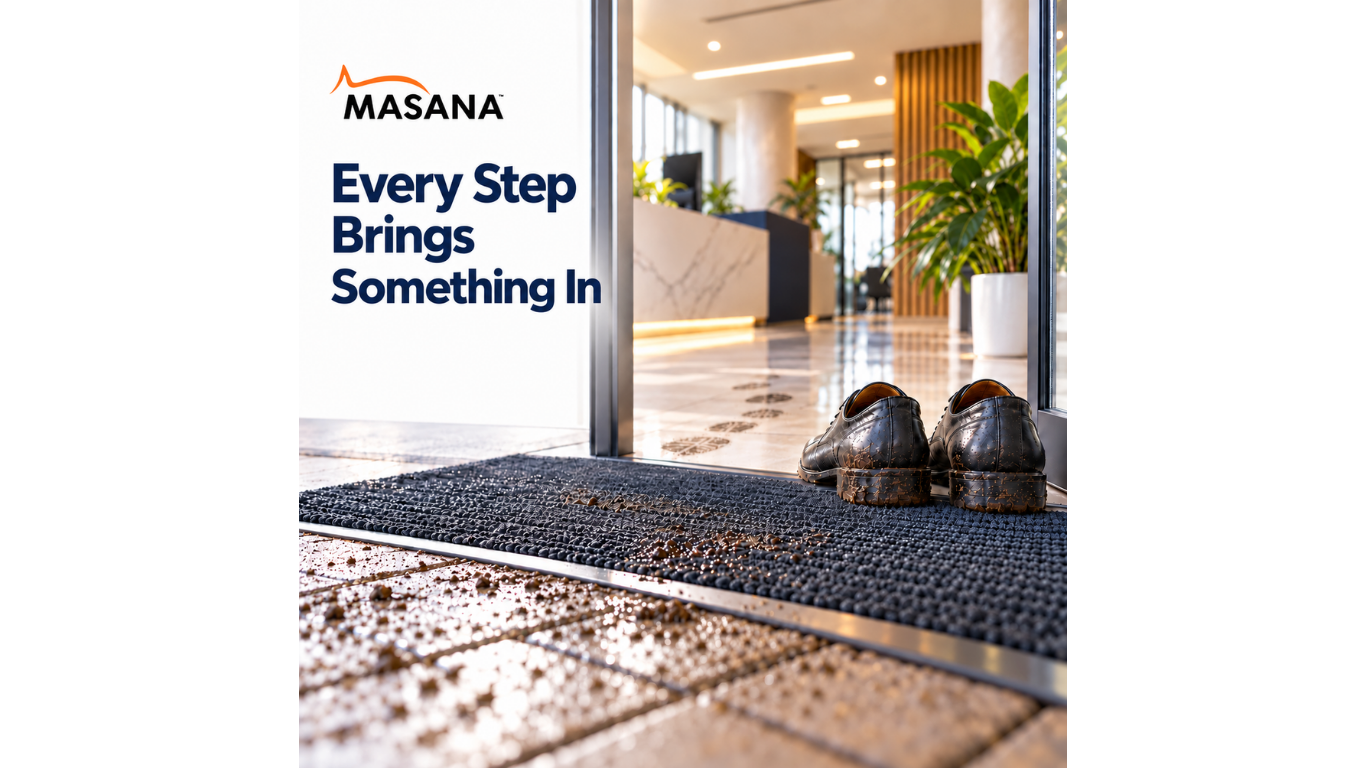
Every Pair of Shoes Brings Something Into Your Workplace Every Day
The Hidden Journey of One Pair of Shoes
Picture this.
Someone parks outside, walks across a dusty or wet pavement and enters reception.
They then walk to their desk, visit the kitchen, attend a meeting and head to another part of the building.
In just a few minutes, those shoes have travelled through several areas of your workplace. Now multiply that by employees, visitors, contractors, suppliers and delivery teams.
Suddenly, that small amount of dirt at the entrance becomes a workplace hygiene issue.
This is why workplace hygiene starts before someone reaches their desk. The entrance is the first opportunity to stop dirt from travelling further into the building.
The Dirt Isn't Stopping at Your Front Door
Think your workplace is clean because the floors look spotless?
Here's the part most people forget: every person who walks through your entrance brings something in with them.
From parking areas and pavements to public transport, construction sites and outdoor walkways, shoes can carry dirt, dust, moisture and other particles into your building.
By lunchtime, hundreds of footsteps may have passed through your reception, corridors, kitchens, meeting rooms and other shared spaces.
The problem isn't that people are bringing dirt into the workplace. That's going to happen.
The real question is: what happens after it comes through the door?
Why Shoes Matter More Than Most People Think
When businesses think about workplace hygiene, the focus often goes straight to desks, bathrooms, kitchens and frequently touched surfaces.
Those areas are important, but floors deserve just as much attention.
Your floor is one of the first surfaces to come into contact with everything carried in from outside.
As people move around the building, dirt and moisture can travel well beyond the entrance.
This can contribute to:
- Dust building up faster
- Mud and moisture creating slip hazards
- Allergens being moved around busy areas
- Floors becoming worn over time
- A workplace looking untidy despite regular cleaning
The result?
Your cleaning team may spend more time chasing dirt instead of preventing it from spreading.
Five Places Shoes Leave the Biggest Impact
Not every area of your workplace receives the same amount of foot traffic. Some areas need more attention than others.
1. Reception Entrances
Your entrance is the first line of defence against outdoor dirt and moisture.
Entrance matting, regular cleaning and quick responses to wet conditions can help prevent dirt from being carried further into the building.
2. Corridors
Corridors connect different parts of your workplace, making them natural high-traffic zones.
Dirt picked up at the entrance can quickly move through these areas as employees and visitors go about their day.
3. Kitchens and Break Rooms
Food spills, moisture and heavy foot traffic can make these areas harder to keep clean.
They may need more frequent checks during busy periods, especially around lunch breaks.
4. Meeting Rooms
Meeting rooms may not always seem like high-traffic areas, but visitors and employees regularly move in and out of them.
A clean meeting space also contributes to the overall impression your workplace gives visitors.
5. Bathroom Entrances
Bathroom entrances experience frequent movement throughout the day.
These areas should form part of a wider floor-care and workplace hygiene plan rather than being treated as an afterthought.
Rainy Days Change the Hygiene Game
South African weather can change your cleaning requirements quickly.
After a rainy morning, employees and visitors can walk into your building with wet shoes, water and mud.
A floor that was clean at 7:30am can look very different by 9am.
Wet floors can also create additional slip risks, making fast response important.
This is where your workplace hygiene plan needs to account for the conditions outside—not just the cleaning schedule on paper.
On rainy days, consider:
- Checking entrance areas more frequently
- Making sure entrance mats are working effectively
- Removing standing water quickly
- Increasing spot cleaning in busy areas
- Paying extra attention to corridors connected to entrances
Not All Foot Traffic Is the Same
A workplace with 50 employees doesn't necessarily have less floor traffic than a workplace with 200.
Why?
Because employees aren't the only people entering your building. Visitors, contractors, suppliers, customers and delivery teams all add to the movement through your facility.
Think about your busiest entrance.
How many people walk through it before 9am?
What happens around lunchtime?
Which areas become busy when employees leave for the day?
Your cleaning plan should reflect how your workplace is actually used.
High-traffic areas may require:
- More frequent cleaning
- Additional entrance matting
- Regular inspections
- Faster responses to spills and moisture
- Different cleaning schedules during peak periods
The goal isn't to clean every area in exactly the same way.
It's to clean according to the needs of the space.
Your Floor Can Tell You Where the Problem Is
Take a closer look at your workplace floor.
Are there darker areas around entrances?
Mud marks near doorways?
Dust collecting along corners?
Streaks appearing in corridors?
These signs can tell you a lot about how people move through your building.
Your floors can almost act like a map of workplace traffic.
Areas showing more dirt, wear or moisture may be receiving more foot traffic than others.
Instead of treating every part of your building exactly the same, identify these hygiene hotspots and give them the attention they need.
The Easiest Way to Stop Dirt Before It Spreads
The goal isn't simply to clean harder.
It's to stop dirt from travelling further into the building.
A practical workplace hygiene plan can include:
- Entrance matting that captures dirt and moisture
- Regular floor cleaning based on foot traffic
- Extra attention after rainy weather
- Spot cleaning during busy periods
- Routine inspections of high-traffic areas
- Quick responses to spills and wet floors
Small changes at the entrance can make a difference to how much dirt reaches the rest of your workplace.
What Decision-Makers Should Be Looking For
If you're responsible for facilities, operations, HR or workplace experience, take a walk through your building and look at it from a different perspective.
Ask yourself:
- Are our entrance mats large enough and positioned correctly?
- Which areas receive the most foot traffic?
- Does our cleaning schedule match those busy periods?
- What happens to our cleaning routine when it rains?
- Are high-traffic areas being checked regularly?
- Are we reacting to visible dirt or preventing it from spreading?
- Are our floors being maintained as part of workplace hygiene not just appearance?
These questions can help identify gaps in your current cleaning routine.
Let's Create Healthier Spaces Together
At Masana Hygiene Services, we help businesses manage workplace hygiene across busy and demanding environments.
From cleaning and hygiene management to floor care, deep cleaning and hygiene solutions, our approach starts with understanding how your facility is actually used.
Because every workplace is different.
And every pair of shoes tells a story about where your people and the dirt have been.
Ready to take a closer look at your workplace hygiene?
Contact Masana Hygiene Services to arrange a site walkthrough and identify the areas that need attention before small cleaning issues become bigger problems.
Frequently Asked Questions
Why is workplace hygiene important for office floors?
Office floors can collect dirt, dust and moisture brought in from outside. Regular floor care helps keep high-traffic areas clean and reduces the build-up of dirt throughout the workplace.
How often should entrance areas be cleaned?
There is no single schedule that works for every workplace. Cleaning frequency should depend on factors such as foot traffic, weather and the type of facility. Busy entrances may require attention several times throughout the day.
Can entrance mats really make a difference?
Effective entrance matting can help capture dirt and moisture before it is carried further into the building. Mats should also be cleaned and maintained regularly to keep them effective.
Which workplace areas collect the most dirt?
Entrances, reception areas, corridors, kitchens, meeting rooms and bathroom entrances can experience significant foot traffic. The busiest areas should be identified and included in the cleaning plan.
What is the first step to improving workplace hygiene?
Start by identifying where people enter and move through your facility. Look for high-traffic areas, dirt build-up and moisture points, then review whether your cleaning schedule addresses those areas effectively.