
Retail Hygiene During Peak Hours: Why Stores Struggle and What Top Stores Do Differently
Retail environments operate under some of the most demanding conditions in facility management. With constant customer movement, unpredictable traffic spikes, and no downtime during trading hours, maintaining hygiene is a continuous operational challenge.
In South Africa’s retail sector—especially in high-traffic malls, supermarkets, and convenience stores—hygiene is not just about cleanliness. It directly influences customer perception, brand trust, compliance, and ultimately, sales performance.
Despite strong operational management, many retail stores struggle to maintain consistent hygiene during peak hours. This is not due to negligence, but because cleaning capacity is often outpaced by real-time customer demand.
Why Retail Hygiene Breaks Down During Peak Hours
Unpredictable Foot Traffic Creates Instant Pressure
Retail spaces experience sudden and intense surges in customer volume driven by:
- Weekend shopping peaks
- Month-end spending cycles
- Public holidays and long weekends
- Festive season demand spikes
- Promotional campaigns and sales events
These fluctuations are difficult to predict with precision and place immediate pressure on cleaning teams who must respond in real time.
During these periods, high-traffic zones such as entrances, checkout areas, and main aisles can become visibly affected within minutes.
Impact in practice:
- Floors accumulate dirt, moisture, and packaging waste rapidly
- Spillages may remain unattended longer than ideal
- Entry points collect litter and tracking debris
- Customer perception of cleanliness declines quickly
Even short delays in response can significantly affect how a store is perceived.
High-Touch Surfaces Create Continuous Recontamination
Retail environments are dominated by shared contact points, including:
- Trolley handles and baskets
- POS machines and card terminals
- Self-service kiosks
- Door handles and entry barriers
- Escalator rails and lift buttons
Even when these surfaces are cleaned regularly, they are immediately reused by hundreds of customers throughout the day.
This creates a continuous cycle of recontamination, meaning that hygiene is never a “once-off task,” but an ongoing process that must be actively maintained.
Cleaning Teams Operate Under Real-Time Constraints
During trading hours, cleaning staff must work around customers, which limits operational efficiency.
This often results in:
- Restricted access to busy aisles
- Delayed spill response in peak zones
- Limited floor cleaning during customer flow
- Dependence on after-hours deep cleaning for full restoration
As a result, cleaning becomes reactive rather than preventative, which reduces overall hygiene consistency during peak trading periods.
Washroom Hygiene Deteriorates Rapidly Under High Usage
Washrooms are one of the most sensitive indicators of retail hygiene standards because they reflect overall operational discipline.
During peak hours, washrooms experience:
- Rapid depletion of consumables such as soap and tissue
- Increased bin overflow due to high usage
- Persistent moisture on floors and surfaces
- Odour build-up between cleaning cycles
Even minor lapses in washroom maintenance can disproportionately impact customer perception of the entire store environment.
Retail Staff Are Not Dedicated Hygiene Operators
Retail employees are primarily focused on:
- Customer service and engagement
- Sales conversion and assistance
- Stock replenishment and merchandising
Hygiene tasks are often secondary responsibilities, which leads to:
- Inconsistent cleaning intervals
- Missed hygiene checks during busy periods
- Delayed response to small spills or waste build-up
Without dedicated hygiene personnel, standards naturally fluctuate throughout the day.
Waste Accumulates Faster Than It Can Be Removed
Retail environments generate continuous waste streams including packaging, receipts, promotional materials, and food-related disposal.
During peak trading hours:
- Waste output increases significantly
- Bin removal schedules remain fixed
- Overflow occurs in high-volume areas
This creates visible hygiene pressure points that directly affect customer experience and store presentation.
Seasonal Peaks Intensify Operational Pressure
Certain retail periods place extreme strain on hygiene systems, including:
- Black Friday sales events
- Festive season trading periods
- School holiday surges
- Month-end consumer spikes
During these times, foot traffic can increase by more than double, overwhelming standard cleaning schedules and requiring intensified hygiene coordination.
What High-Performing Retail Stores Do Differently
Continuous Cleaning Presence in High-Traffic Zones
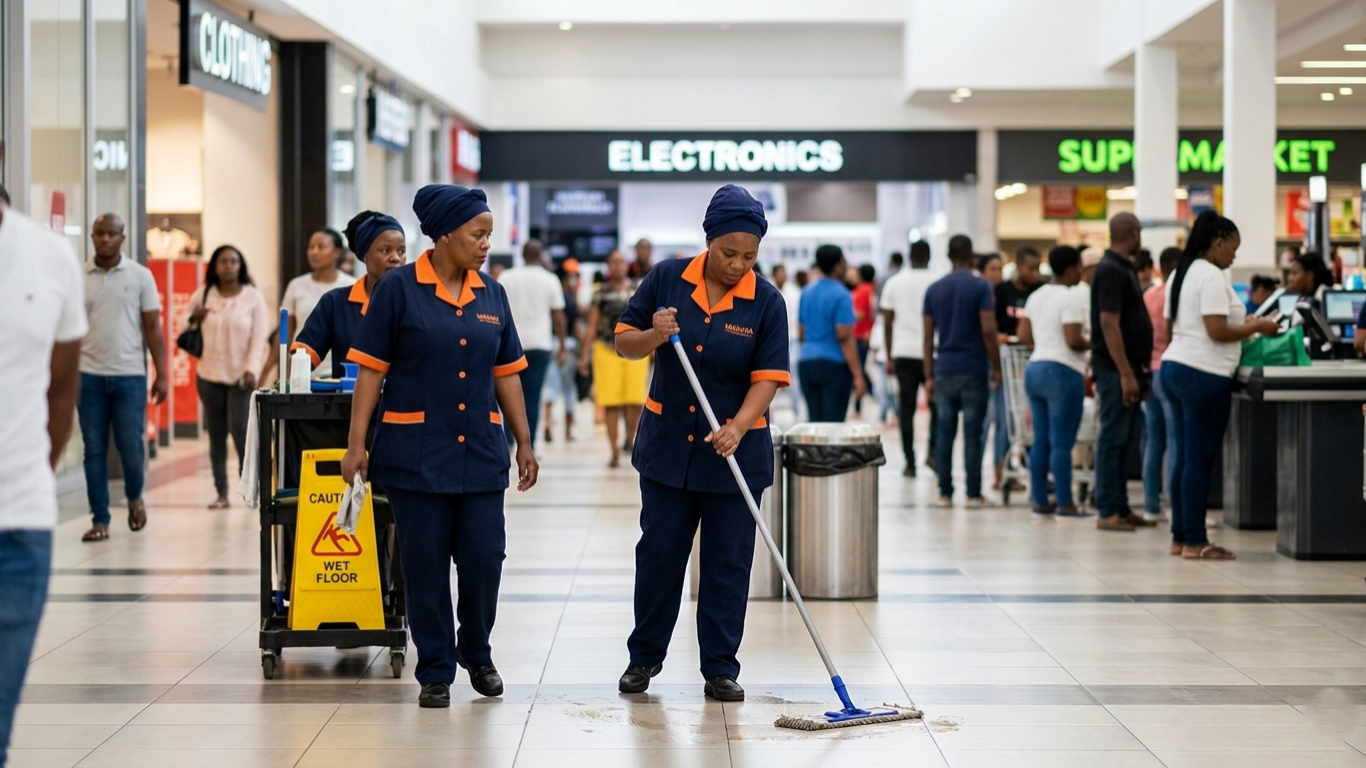
Top-performing stores maintain visible cleaning presence throughout trading hours, particularly in entrances, aisles, and checkout areas. This ensures issues are addressed immediately rather than accumulating.
Structured Washroom Monitoring Systems
Instead of fixed cleaning intervals alone, washrooms are checked dynamically—often every 60–120 minutes or more frequently during peak demand periods.
High-Touchpoint Sanitisation Cycles
Frequent sanitisation of shared surfaces such as POS machines, trolleys, and door handles helps reduce continuous contamination cycles.
Consumable Stock Monitoring Systems
Leading retail environments implement monitoring systems to ensure soap, tissue, and hygiene supplies are replenished before depletion occurs.
Zoned Cleaning Strategies
Stores are divided into high, medium, and low priority zones based on foot traffic, allowing cleaning teams to focus resources where they are most needed.
Rapid Spill Response Protocols
Immediate response systems ensure that spills and hazards are addressed within minutes, reducing risk and maintaining customer safety perception.
The Role of Professional Hygiene Services in Retail
Increasingly, retailers are partnering with professional hygiene service providers to maintain consistent standards during trading hours.
These services typically include:
- In-store daytime cleaning support
- Washroom hygiene management
- Waste collection and removal systems
- Scheduled deep cleaning services
- Hygiene audits and reporting systems
This allows retail staff to remain focused on customer experience while ensuring hygiene standards remain consistently high.
The Business Impact of Poor Retail Hygiene
When hygiene standards decline, the impact is immediate and measurable:
- Reduced customer dwell time
- Lower repeat visit rates
- Increased negative online reviews
- Damage to brand perception
- Potential compliance and safety risks
In modern retail environments, hygiene is no longer a background function—it is a direct driver of customer trust and revenue performance.
Conclusion: Retail Hygiene Requires a System, Not Just Effort
Retail hygiene challenges during peak hours are driven by constant demand, unpredictable traffic patterns, and limited real-time cleaning capacity.
The most successful retail environments do not rely on effort alone—they implement structured hygiene systems designed for continuous operation.
A well-managed hygiene approach ensures:
- Cleaner environments throughout the day
- Improved customer experience and perception
- Stronger compliance and safety standards
- Long-term brand protection and trust
👉 For retail stores struggling during peak trading hours, the solution is not more reactive cleaning—but a structured, managed hygiene system built for high-volume environments.