
Why Some Teams Naturally Keep Workspaces Clean While Others Don't
Across many industries in South Africa, organisations invest in professional cleaning services, workplace hygiene programmes, and facility management solutions, yet still experience very different outcomes.
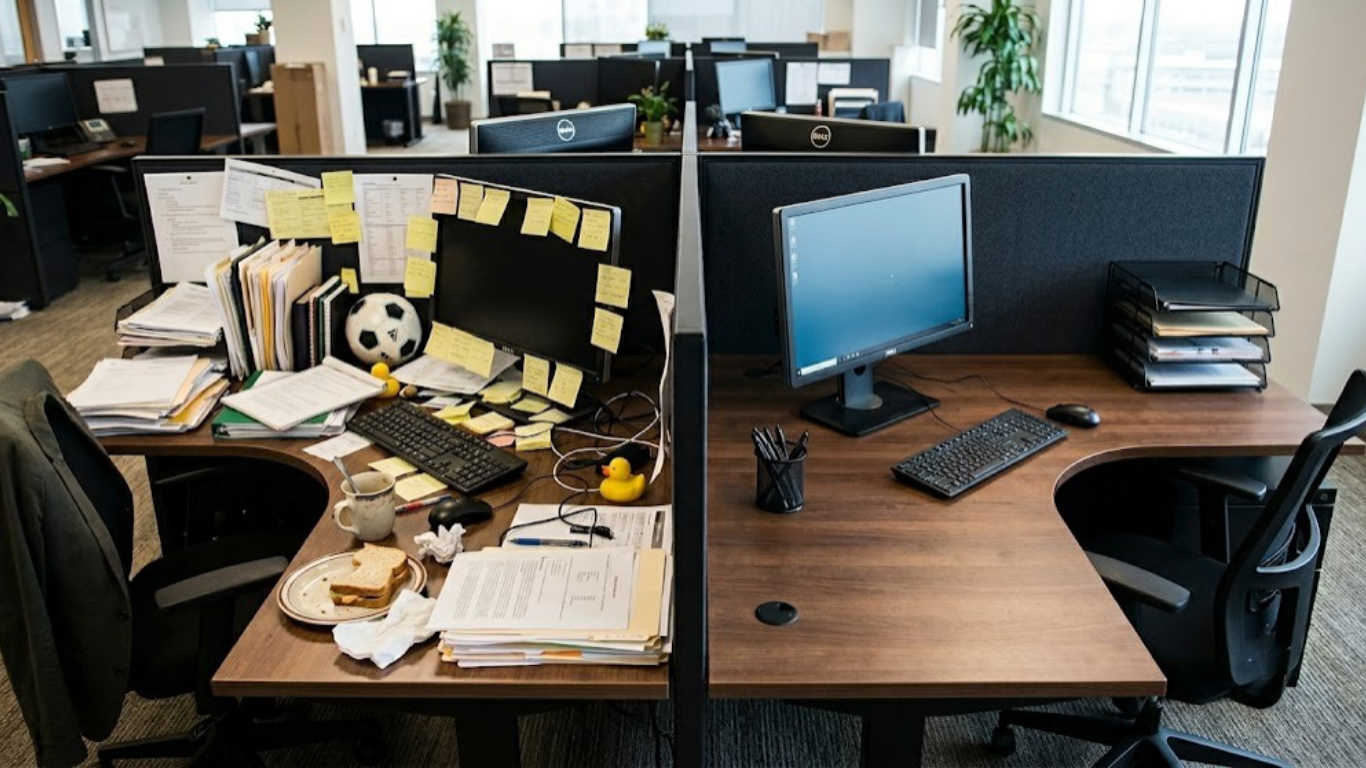
Some workplaces remain consistently clean, organised, and well-maintained with surprisingly little effort. Shared spaces stay tidy, desks remain clutter-free, and hygiene standards are maintained throughout the day.
Other workplaces face an ongoing battle against clutter, overflowing bins, untidy communal areas, and recurring hygiene issues. Despite regular cleaning schedules and professional support, cleanliness standards seem difficult to sustain.
Many businesses assume the difference comes down to the quality of the cleaning service.
In reality, the difference is often much deeper.
Clean workplaces are not created by cleaning alone. They are created through a combination of workplace culture, employee behaviour, leadership, environmental design, and effective hygiene systems.
Understanding why some teams naturally maintain cleaner workspaces can help organisations build environments that remain consistently clean rather than constantly relying on corrective action.
Clean Workspaces Are Not Created by Cleaning Alone
Professional cleaning services play a critical role in maintaining workplace hygiene standards. They remove dirt, sanitise surfaces, manage waste, and help create healthier environments for employees and visitors.
However, even the best cleaning programme cannot compensate for poor workplace habits.
A cleaning team may leave an office spotless in the morning, but if employees leave dishes in communal kitchens, allow clutter to accumulate, ignore spills, or treat cleanliness as someone else's responsibility, standards can deteriorate rapidly.
Workplaces generally remain cleaner when:
- Employees take responsibility for their immediate workspace
- Shared areas are treated with respect
- Small messes are addressed immediately
- Hygiene forms part of everyday routines
- Cleanliness is viewed as a shared responsibility
Workplaces often struggle when:
- Responsibility is shifted entirely to cleaning staff
- Hygiene is viewed as a reactive function
- Clutter accumulates between service visits
- Small issues are ignored until they become major problems
The cleanest workplaces are not necessarily those with the most intensive cleaning schedules. They are often the workplaces where people actively support the hygiene systems already in place.
Why Ownership Is the Foundation of Workplace Hygiene
One of the strongest indicators of a consistently clean workplace is employee ownership.
Ownership means employees view cleanliness as part of their role rather than something delegated entirely to another department.
When people feel responsible for their environment, they naturally contribute to maintaining it.
In workplaces with strong ownership:
- Staff clean as they go
- Waste is disposed of promptly
- Shared spaces remain organised
- Equipment is returned after use
- Hygiene concerns are addressed quickly
This behaviour reduces the burden on cleaning teams and prevents minor issues from escalating into larger problems.
By contrast, workplaces that lack ownership often develop a culture where every cleanliness issue is left for someone else to address.
This creates unnecessary pressure on cleaning teams while allowing clutter and hygiene concerns to build between cleaning cycles.
Sustainable workplace hygiene depends on partnership. Professional cleaning services and employee ownership work best when they support one another.
Workplace Cleanliness Culture Determines Long-Term Success
Culture is often the hidden factor that separates consistently clean workplaces from those that struggle with ongoing hygiene challenges.
A workplace cleanliness culture develops when expectations around hygiene become part of the organisation's daily behaviour.
People stop cleaning because they are told to and start cleaning because it is simply how things are done.
In strong workplace cultures:
- Cleanliness is the expected norm
- Employees address small issues naturally
- Shared responsibility is understood
- Standards remain consistent across teams
- New employees quickly adopt existing habits
In weaker workplace cultures:
- Mess is tolerated until it becomes problematic
- Employees assume someone else will deal with issues
- Standards vary significantly between departments
- Accountability becomes inconsistent
Over time, culture becomes more influential than cleaning schedules.
A strong culture can sustain excellent hygiene standards with relatively little effort, while a weak culture can undermine even the best cleaning programmes.
Facility Design Plays a Bigger Role Than Most Businesses Realise
Many organisations focus on cleaning frequency while overlooking another important factor: environmental design.
The physical layout of a workplace has a direct impact on how easily hygiene standards can be maintained.
Well-designed workplaces support cleanliness by making it easy for employees to do the right thing.
These environments typically include:
- Convenient waste disposal points
- Clearly designated storage areas
- Organised workstations
- Accessible cleaning resources
- Efficient traffic flow
Poorly designed workplaces often create obstacles to cleanliness.
When bins are difficult to access, storage is inadequate, or shared spaces become overcrowded, maintaining hygiene becomes more difficult regardless of cleaning frequency.
Good facility hygiene management considers both cleaning systems and workplace design.
Leadership Sets the Hygiene Standard
Workplace hygiene is heavily influenced by leadership behaviour.
Employees pay close attention to what leaders prioritise.
When managers and leaders demonstrate respect for workplace cleanliness, employees are more likely to follow their example.
Leadership influences hygiene by:
- Setting expectations
- Reinforcing standards
- Modelling positive behaviour
- Addressing issues consistently
- Creating accountability
When leadership treats cleanliness as important, it becomes embedded in workplace culture.
When leadership ignores hygiene concerns, standards often begin to weaken.
Many of the cleanest workplaces are not those with the largest cleaning budgets. They are workplaces where leadership consistently reinforces positive behaviours.
Small Daily Habits Create Lasting Results
Clean workplaces are rarely the result of one major initiative.
Instead, they are built through small actions repeated consistently over time.
Simple habits can have a significant impact on overall workplace cleanliness:
- Cleaning spills immediately
- Resetting desks after use
- Returning equipment to designated areas
- Emptying waste correctly
- Keeping communal areas tidy
- Reporting maintenance issues quickly
Individually, these actions may seem insignificant.
Collectively, they create an environment where cleanliness becomes sustainable rather than reactive.
Small habits often determine whether a workplace remains consistently clean or requires constant intervention.
Accountability Keeps Hygiene Standards Consistent
Even the strongest workplace systems require accountability.
Without accountability, standards naturally decline over time.
In high-performing workplaces:
- Employees respectfully address hygiene concerns
- Shared spaces are maintained collectively
- Expectations remain visible
- Teams support one another
In lower-performing environments:
- Problems are ignored
- Responsibility becomes unclear
- Small issues accumulate
- Cleaning teams carry the entire burden
Accountability does not mean creating a culture of criticism.
Instead, it means creating a shared commitment to maintaining a positive and professional work environment.
The Important Role of Professional Cleaning Services
Professional cleaning services remain a critical component of workplace hygiene management.
Their expertise, equipment, and structured processes help organisations maintain high standards across their facilities.
Professional cleaning services are most effective when:
- Workspaces are maintained between visits
- Employees support hygiene initiatives
- Clutter is controlled consistently
- Shared spaces are respected
When workplace culture supports cleanliness, cleaning teams can focus on maintaining exceptional standards rather than constantly correcting preventable issues.
This creates a more efficient and effective hygiene programme for everyone involved.
Clean Workplaces Are Built, Not Outsourced
The difference between clean and messy workplaces is rarely determined by cleaning services alone.
Instead, it is shaped by the alignment between:
- Workplace culture
- Employee behaviour
- Leadership commitment
- Environmental design
- Accountability systems
- Professional cleaning support
When these elements work together, cleanliness becomes easier to maintain and more sustainable over the long term.
Professional cleaning services maintain standards.
People sustain them.
Building a Stronger Workplace Cleanliness Culture
If your organisation struggles with inconsistent cleanliness, increasing cleaning frequency may not be the only solution.
Often, the most effective approach combines professional hygiene services with stronger workplace systems, leadership support, employee ownership, and a culture that values cleanliness every day.
At Masana Hygiene Services, we help organisations create cleaner, healthier, and more consistent work environments through structured hygiene solutions, professional service delivery, and workplace hygiene support.
Because the cleanest workplaces are not simply cleaned well.
They are built on a culture that supports cleanliness every single day.