
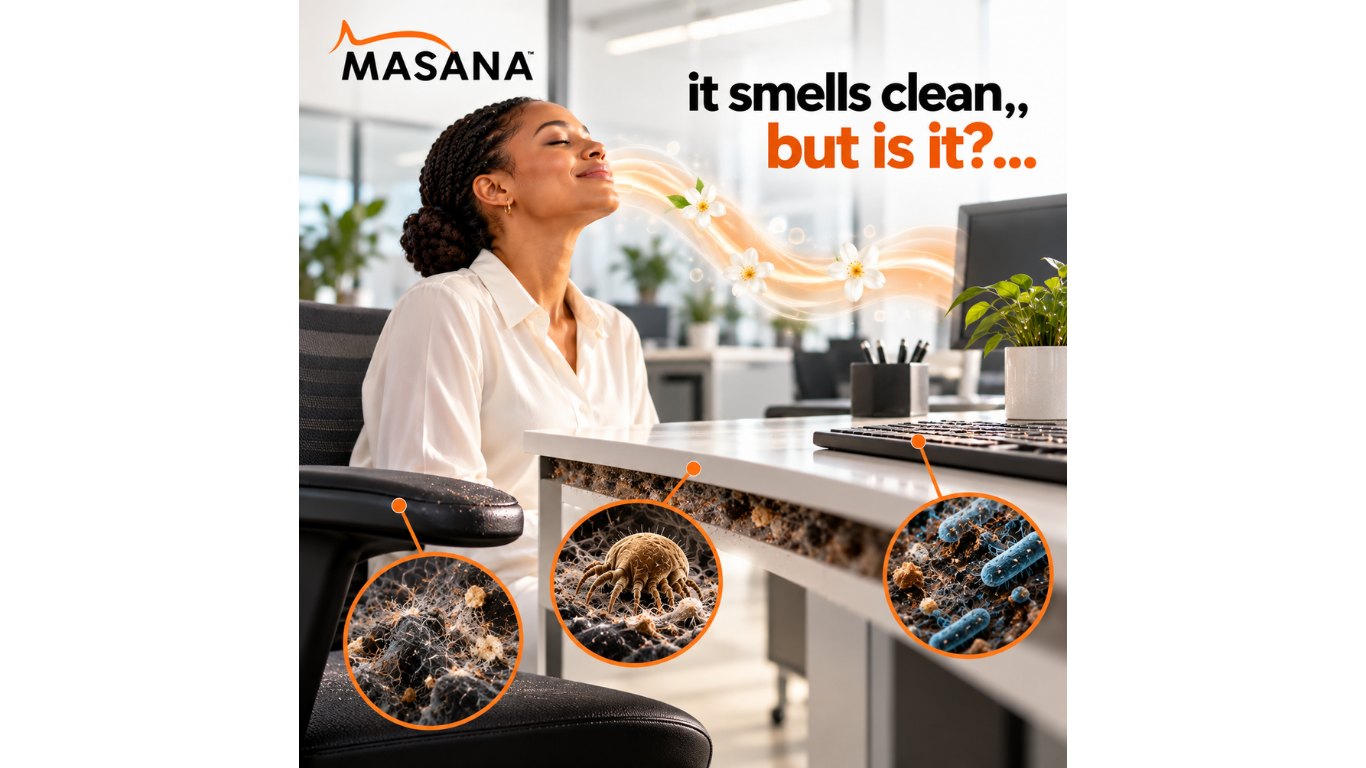
Your Office Isn’t Clean Just Because It Smells Like Disinfectant
You walk into the office first thing in the morning. The floors are shiny, the reception area looks neat, the bins have been emptied and there it is — that strong smell of disinfectant.
Your first thought is probably, “At least the office is clean.”
But here's the uncomfortable part: your nose can be fooled.
A workplace can smell strongly of disinfectant while still having hygiene problems hiding in plain sight. A fresh chemical smell might create the impression that everything has been thoroughly cleaned, but it doesn't tell you whether high-touch surfaces were properly maintained, whether the washroom was checked recently or whether the carpets, vents and hard-to-reach areas have received the attention they need.
The Smell Test Isn't Enough
We have become very good at associating certain smells with cleanliness. Lemon, pine, bleach and disinfectant have almost become shortcuts for the word “clean”. If you walk into a building and smell one of them, your brain quickly connects the dots.
But smell is not a hygiene inspection.
A strong disinfectant smell doesn't tell you when the area was cleaned, what was cleaned or whether the correct cleaning process was followed. It certainly doesn't tell you what has happened since the cleaning team left.
That's why workplace hygiene needs to be judged by more than what your nose picks up when you walk through the door.
Look Closer
Take your reception area, for example. The desk might look spotless, but what about the door handles, lift buttons, light switches and other surfaces that people touch throughout the day?
Then there is the kitchen. The counter may have been wiped down, but what about the fridge handle, microwave buttons, cupboard handles and taps? These are small details that can easily disappear from a routine cleaning checklist while remaining part of everyone's daily environment.
The same applies to the washroom. A freshly mopped floor is a good start, but workplace hygiene doesn't stop there.
Are soap dispensers full? Is toilet paper available? Are sanitary bins being managed appropriately? Is the area being checked throughout the day or only cleaned once in the morning?
Suddenly, that strong disinfectant smell doesn't tell you very much.
Your Workplace Has a Hygiene Story
Every workplace leaves clues.
Footprints around the entrance tell you something about traffic. Marks around door handles tell you something about frequently touched areas. A recurring smell in the kitchen could point to waste, food, drainage or ventilation issues. An empty soap dispenser could indicate that consumables aren't being monitored closely enough.
These things may seem small individually, but together they tell a story about how a workplace's hygiene is actually being managed.
The problem is that we often notice these issues only after they become obvious. By then, someone has already complained, a visitor has noticed or employees have simply become used to the problem.
Good workplace hygiene should work in the opposite direction. It should identify and address these issues before they become complaints.
The 8 AM Problem
There is another trap that businesses can fall into: judging their cleaning standards when the workplace is at its best.
At 8 AM, the floors may be freshly cleaned, bins emptied and washrooms stocked. Everything looks great.
But what happens at 11:30? What happens after lunch? What does the washroom look like in the afternoon after dozens or hundreds of people have used it?
A workplace doesn't stop being used when the cleaning team finishes.
Employees continue walking through the building. Visitors arrive. People use the kitchen. Bins fill up. Washrooms get used. Surfaces are touched repeatedly. Dirt and moisture are brought in from outside.
This is why workplace hygiene isn't simply about getting everything clean once a day. It's about maintaining an appropriate standard throughout the working day.
The Disinfectant Cloud Doesn't Fix Everything
There is also a difference between removing a problem and covering it up.
If a workplace has an unpleasant odour coming from waste, damp carpets, drains, poor ventilation or another source, adding more fragrance may temporarily change what you smell. But it doesn't necessarily address why the odour is there in the first place.
In other words, spraying something stronger isn't always the answer.
Good hygiene management looks for the source of the problem. If an area repeatedly develops an unpleasant smell, becomes dirty quickly or requires constant attention, that should prompt a closer look at the underlying cause.
The goal isn't to make a workplace smell like disinfectant. The goal is to create an environment that is properly maintained.
Cleaning Is an Activity. Hygiene Management Is a System.
This is where the difference between cleaning and hygiene management becomes important.
Cleaning is something that happens. Hygiene management is the system behind it.
It considers what needs to be cleaned, how often it needs attention, which products and equipment should be used, who is responsible, how the work is checked and what happens when something isn't right.
It also recognises that not every workplace is the same.
A busy retail environment has different cleaning requirements from a corporate office. A warehouse experiences different hygiene challenges from an educational facility. A high-traffic building may require more frequent attention to certain areas than a quieter workplace.
Your cleaning plan should reflect how your workplace actually operates.
The Things Nobody Notices Matter Most
Interestingly, good workplace hygiene often involves work that nobody notices.
Nobody compliments the cleaning team because the soap dispenser was refilled before it became empty. Nobody sends an email because the sanitary bin was serviced on schedule. Nobody celebrates because a high-touch surface was cleaned before anyone noticed it needed cleaning.
And that's actually the point.
Good hygiene often means preventing the problem before people have a reason to complain.
When hygiene is working properly, employees can simply use the workplace without constantly thinking about whether something has been cleaned, whether there is enough soap or whether a bin needs attention.
The absence of complaints doesn't necessarily mean everything is perfect, but a well-managed hygiene system should make it much easier to identify and address problems before they become recurring issues.
What Should You Be Looking At?
The next time you walk into your workplace, don't just ask whether it smells clean. Look around.
Think about the areas people touch most often. Check whether washrooms are being maintained throughout the day. Look at your waste collection process. Consider whether carpets and upholstery are receiving appropriate attention. Think about the areas people rarely notice, such as vents, corners and difficult-to-reach spaces.
Most importantly, ask whether there is a system for identifying problems, reporting them and making sure they are corrected.
These questions tell you far more about your workplace hygiene than the smell of disinfectant ever could.
A Clean Workplace Shouldn't Need to Prove Itself
The irony is that good workplace hygiene isn't supposed to be dramatic.
You shouldn't walk into an office and immediately think, “Wow, they used a lot of disinfectant.”
You should simply notice that the environment is well maintained. The washrooms are functional and stocked. Waste is managed properly. High-touch areas receive attention. Floors and carpets are cared for. Unpleasant odours are addressed at their source. Problems are identified before they become major complaints.
That is the difference between creating the impression of cleanliness and actually maintaining workplace hygiene.
So, the next time your office smells strongly of disinfectant, don't automatically assume everything is clean. Take a closer look. Check the details. Ask how the standard is being maintained throughout the day.
Because the real test of workplace hygiene isn't what your nose tells you when you walk through the door.
It's what you discover when you start looking.
At Masana Hygiene Services, we believe workplace hygiene goes beyond making a space look or smell clean. It is about understanding the environment, identifying hygiene needs, maintaining consistent standards and helping businesses create healthier spaces for the people who use them every day.
Don't just make your workplace smell clean. Make sure it is clean where it counts.
Let's create healthier spaces together.