
Workplace Hygiene in South Africa During Winter: How Colder Weather Exposes Cleaning Gaps
As temperatures drop across South Africa, workplace hygiene suddenly becomes far more noticeable. In cities like Johannesburg, Pretoria, and Cape Town, colder weather pushes more people indoors, increases contact with shared surfaces, and places additional pressure on workplace hygiene systems.
The issue is not that cleaning stops during winter. The challenge is that colder conditions expose weaknesses in hygiene systems that may go unnoticed during warmer months.
As indoor activity increases, employees become more aware of cleanliness, washroom conditions, sanitisation practices, and the overall hygiene standards within the workplace.
Why Colder Weather Increases Workplace Hygiene Pressure
Winter changes how people interact within office buildings and commercial facilities. More time is spent indoors, shared areas experience heavier use, and germs spread more easily in enclosed environments.
This creates increased pressure on:
- Shared workplace facilities
- Washroom hygiene systems
- High-touch surfaces
- Cleaning schedules and replenishment cycles
Even well-managed facilities can begin to show signs of inconsistency when hygiene systems are not properly structured to handle increased winter demand.
The result is not always immediate hygiene failure. More often, it is a gradual decline in consistency — and employees notice inconsistency very quickly.
The “It’s Just Allergies” Workplace Conversation
Most workplaces experience the same pattern during colder months.
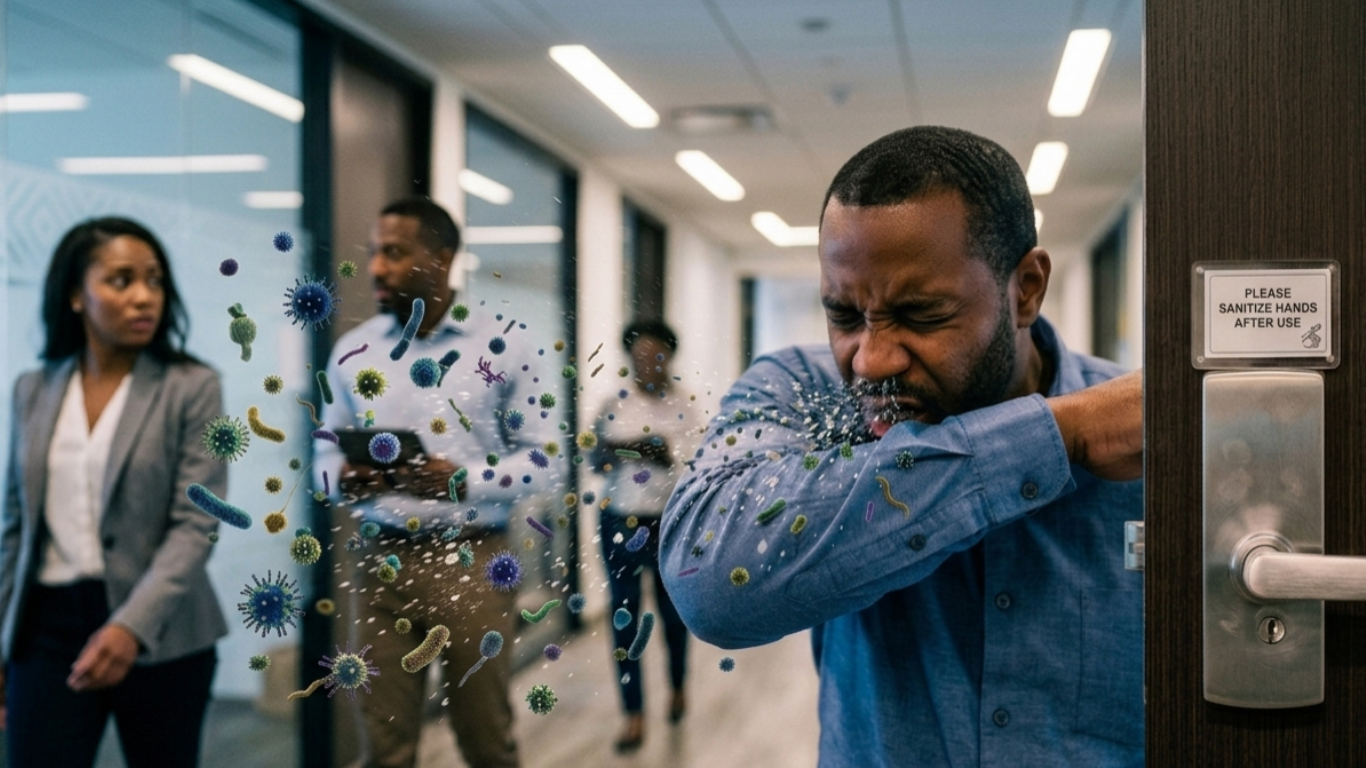
Someone coughs. Someone sneezes. Someone mentions allergies.
As more people work in enclosed office spaces, awareness around workplace hygiene naturally increases. Employees become more conscious of sanitisation, shared surfaces, and overall cleanliness.
Even when cleaning standards remain unchanged, employee perception changes significantly during winter.
This is why visible and consistent hygiene practices become more important during colder seasons.
Where Workplace Hygiene Problems Usually Start
Workplace hygiene issues rarely appear overnight. They tend to develop gradually in predictable areas throughout the facility.
1. Washrooms Under Increased Pressure
Higher traffic leads to:
- Faster depletion of soap and paper products
- Increased waste accumulation
- More visible cleanliness issues
- Delays in servicing and replenishment
Washrooms are often one of the first areas where hygiene inconsistency becomes noticeable.
2. High-Touch Surfaces
Shared surfaces become constant transmission points during winter, including:
- Door handles
- Lift buttons
- Shared desks
- Kitchen counters
- Meeting rooms
Without structured cleaning cycles, contamination builds quickly throughout the day.
3. Replenishment Delays
Even short delays in restocking soap, sanitiser, or paper towels can negatively impact employee perception of cleanliness and professionalism.
Small hygiene gaps become far more visible during colder weather.
4. Lack of Visible Hygiene Systems
When cleaning systems are not monitored, recorded, or supervised consistently, employees begin to assume hygiene standards are slipping.
In modern workplaces, visible hygiene accountability matters just as much as cleaning itself.
Why Modern Workplaces Need More Than Basic Cleaning
Today’s commercial facilities require more than routine cleaning services. Businesses increasingly need structured hygiene management systems that provide:
- Visible accountability
- Consistent supervision
- Standardised cleaning procedures
- Reporting and verification systems
Without structured processes, workplace hygiene becomes reactive rather than proactive — and reactive systems struggle during periods of increased demand.
The Shift Towards Structured Workplace Hygiene Management
Across South Africa, businesses are moving toward more structured hygiene solutions to maintain consistency during high-pressure periods.
A structured hygiene management approach helps ensure:
- Every cleaning task is completed consistently
- High-risk areas receive continuous attention
- Hygiene standards remain measurable
- Service delivery can be verified and monitored
This creates greater confidence for both employees and visitors during winter months when hygiene awareness is naturally higher.
How Professional Hygiene Providers Support Workplace Consistency
Many businesses now partner with professional hygiene service providers to improve accountability and maintain hygiene standards throughout the year.
Structured hygiene services typically include:
- Washroom hygiene management
- Digital cleaning verification systems
- Scheduled sanitisation of high-touch surfaces
- Proactive supervision and reporting
- Deep cleaning and hygiene standardisation
This approach helps businesses maintain cleaner, healthier, and more professional workplace environments during colder seasons.
Why Hygiene Visibility Matters During Winter
Colder weather does not create entirely new workplace hygiene problems. It simply makes existing issues easier to notice.
As indoor activity increases across workplaces in Johannesburg, Pretoria, and Cape Town, businesses that rely on structured hygiene systems are far more likely to maintain consistency.
Those without structured systems often begin noticing gaps in cleanliness, replenishment, and overall workplace hygiene performance.
Because in modern workplaces, it is no longer enough to appear clean occasionally.
Consistency is what employees, clients, and visitors notice most.